Showing posts with label prosedur. Show all posts
1. Safety Assessment
1.1. Stenl hand washing needs to be reviewed
1.2. Plan validated program back
1.3. The need for tools and materials are identified
2.melakukan preparation tools
2.1. Prepared with a complete tool:
- Water flows
- Brush sterile in its place
- Alkoho170%
- Soap
- Eland sterile gloves
2.2. Tools are neatly
2.3. Equipment was brought to a close patient
3. Melakuakan disinfection measures (hand washing with sterile)
3.1. Review the readiness tool tools
necessary action
3.2. Remove all signs attached to areas such as the hands and rings
wristwatch
3.3. Wet your fingers, arms up to the elbow with water, then pour soap
(2-5 ml) into the hands and rub the hands and arms up to 5 cm above the elbow
3.4. Brush your fingertips, hands, arms and nails by about l5 times rubbing
3.5. Brush your palms up to 10 times rubbing elbows
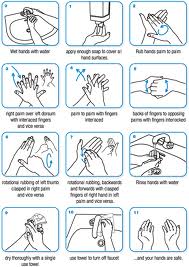
 3.6. Rinse with clean water flowing
3.7. After completion of the hand tetal: directed upwards
3.8. Flush hands with alcohol 70%


3.9. Use sterile gloves

1. client preparation 
1.1 Greetings therapeutic delivered to the patient / family friendly upon meeting
1.2 Plan of action described to the patient / family understand
1.3 Plan validated program back
1.4 Readiness patients be re-examined
2. preparation  tool
2.1 Installing Infusion
- Appropriate IV solution
- Abocat (adjust no.ukuran)
- Set infusion (makrodriplmikrodrip)
- Torniquet
- Handsccen sterile
- Sterile Gauze in place
- Bethadine
- Plaster & scissors
- Air instnimen
- Shaver if necessary
 
- Standarinfus
- Pengalas
- Cotton alcohol in place
- Nierbekken
- Spalk if necessary
3. action procedures
3.1 Installing the infusion
a. Recheck therapy program
b. Wash your hands
c. Check the therapy program using the "six rights" of drug delivery, check the solution to the color, clarity
    and expiration date
d. Prepare IV fluids and infusion sets
e. Open the sterile package using aseptic technique
f . When using an IV in a bottle remove the metal cover from the rubber plates. To remove the plastic IV
    solution bag plastic layer on top of the hose port IV
g. Open the infusion set, maintain sterility in both ends
h. Replace the roller clamp approximately 2-4 cm below the drip chamber and roller clamp move to "off"
i. Stick to the infusion set or a bottle of liquid kantlmgJ. Fill with IV fluids and avoid not to get the air / air bubbles are left: the hose to the roller position "on"
k. Prepare a comfortable position, where the vein used plih & plug pengalas
l. If there are a lot of hair in areas where razor stabbing stabbing
n. Wash your hands
o. Wear disposable gloves
p. Choose a good vein terdilatasi
q. Disinfection pricking area with cotton alcohol or with the correct technique.
r. Perform pricking veins. Hold vein by putting your thumb over the vein and the skin stretch direction
    opposite deugan stabbings, puncture with the bevel facing upwards at an angle of 20-30 °
s. Note the discharge of blood through the needle indicates needle hose te (ah into the vein, lower the needle 
    until almost touching the skin. Encourage catheter in the vein until the "Hub" stick with a stabbing vein
t. Hold the catheter with one hand, remove torniquet quickly connect the infusion set
u. Remove the roller clamp to start the drip drip. When droplets smoothly, base needle taped to the skin with
     tape.
v. The needle and the puncture given bethadine and covered with sterile gauze and plaster
w. Set the drip infusion that has been determinedx. Posted limb infusion, infusion needle position is set to not move or change its location. if necessary use
   
spalk

y. Remove gloves, wash your hands and clean up tools

4. documenting actions

4.1 Response of patients documented
4.2 The timing of the preparation of documented pasier
4.3 Documentation recorded jetas / easy, readable
4.4 Documentation signed and the full name and clearly
  Provide immunity active immunization against poliomyelitis disease.
Polio can cause muscle pain and paralysis in one or both arms / legs. Polio can cause paralysis of the respiratory muscles and muscles to swallow. Polio can cause death.
There are two kinds of polio vaccine:
IPV (Inactivated Polio Vaccine, the Salk vaccine), polio virus that had been turned off and is given by injection
OPV (Oral Polio Vaccine, Sabin Vaccine), a vaccine containing live attenuated and has been given in pill or liquid form.
Basic polio immunization given 4 times (polio I, II, III, and IV) with intervals of not less than 4 weeks.
Repeated polio immunization given 1 year after polio immunization IV, then at primary school (5-6 years), and on leaving school (12 years).
In Indonesia generally given Sabin vaccine. The vaccine is given as 2 drops (0.1 mL) directly into the child's mouth or using a spoon containing sugar water.
Polio vaccine contraindications:
Severe diarrhea
Immune disorders (due to immunosuppressive drugs, chemotherapy, corticosteroids)
Pregnancy.
Side effects that may occur in the form of paralysis and convulsions.
The first and second dose is required to induce a primary immune response, while the third and fourth dose required to increase the strength of the antibody to the highest level. After getting the basic immunization series, the adults do not need to be done routinely giving booster, unless he wanted to travel to areas where polio is still common.
To adults who have never been immunized against polio and the need to undergo immunization, should only be given IPV.
To the people who have had severe allergic reactions (anaphylactic) after administration of IPV, streptomycin, polymyxin B or neomycin, should not be given IPV. OPV should be given.
To people with impaired immune systems (such as people with AIDS, HIV infection, leukemia, cancer, lymphoma), it is recommended to be given IPV. IPV is also given to people who are undergoing radiation therapy, cancer therapy, corticosteroids or other immunosuppressive drugs.
IPV can be given to children with diarrhea.
If the child is suffering from mild or severe illness, immunization should be postponed implementation until they are completely recovered.
IPV can cause pain and redness at the injection site, which usually lasts only for a few days.


1. preparation tool
Stationery
2. action procedures
2.1 Validating data relating identified during history collection and physical assessment
2.2 Group related data that is generally the signs and symptoms that indicate a public health problem
2.3 Identify the need - the need of the client (the problem - the problem)
2.4 Making nursing diagnoses: Nutrition less than body requirements and nutrients the body needs, high risk or poor nutrition more than body requirements
2.5 Evaluation of the list of nursing diagnoses are developed for each individual client meetings
3. documentation

  • Documented patient response
  • The timing of the action
  • Documentation recorded with clear and readable
  • The documentation was signed and given a clear name